
LongHorn Steakhouse Steak Seasoning Guide: What Makes the Steaks Taste Different?
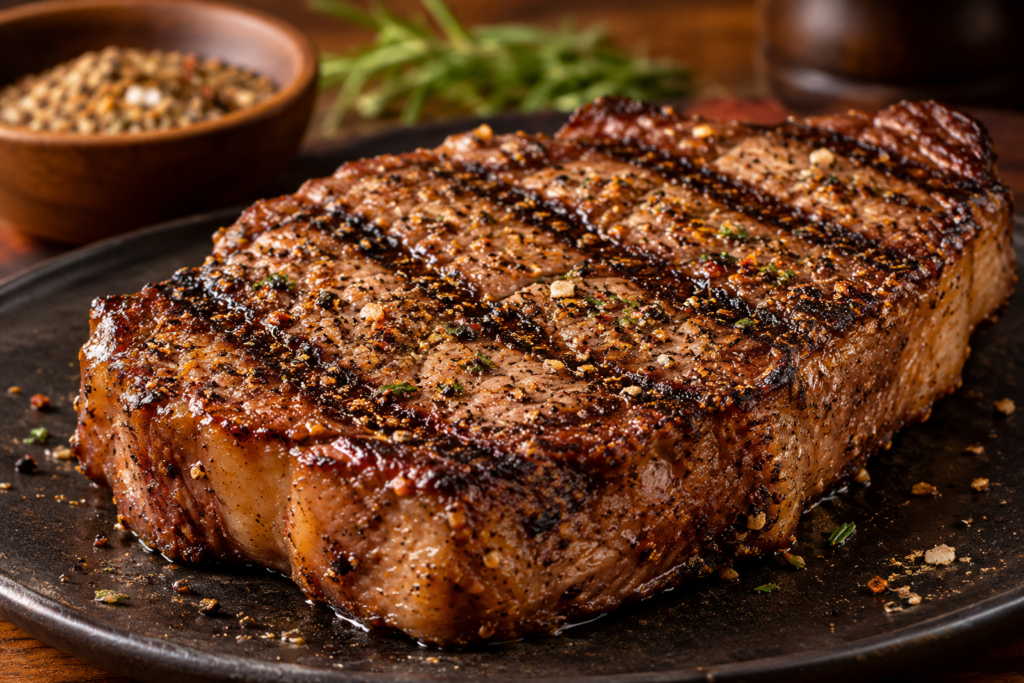
People ask what LongHorn puts on its steaks, and the honest answer is short. LongHorn Steakhouse steak seasoning isn’t one recipe. The chain uses a few in-house blends, names them publicly, and keeps the ingredients private.
So why do the steaks taste the way they do? Spice is only part of it. The beef, the fire, the crust and the timing matter just as much, and you can’t copy the result with a spice jar alone.
One thing before we go further. This is an independent guide, not an official LongHorn page. I’ll tell you what LongHorn has said itself, what other publications have reported, and what’s just general cooking knowledge.
What Seasoning Does LongHorn Steakhouse Use?
Start with what LongHorn says on its own website. It lists three in-house seasonings:
Grill Seasoning: described as a blend of herbs that goes with whatever comes off the grill.
Char Seasoning: made to bring out the fire-grilled flavor of the bone-in cuts. The Outlaw Ribeye is described as seasoned edge to edge with it.
Prairie Dust Seasoning: described as a versatile blend for steak, chicken, vegetables and more.
The site also mentions a 7-pepper seasoning as an insider tip for the New York Strip and the Kansas City Strip. Older menu descriptions say Flo’s Filet is coated in the “signature seasoning.”
Then there’s what others have reported. The food site The Takeout asked LongHorn which blend goes on which cut. Its account says Char goes on bone-in, marbled steaks, and a more pepper-forward Grill blend goes on the 12 oz ribeye and Flo’s Filet. That doesn’t line up perfectly with LongHorn’s own tip about the New York Strip. Either practice varies, or menus have changed. I wouldn’t treat the exact pairings as fixed.
What nobody has confirmed is the actual recipe. The ingredients and amounts in every blend remain private.
Why Do LongHorn Steaks Taste Different?
Think of it as a chain of small choices. Seasoning is one link.
Start with the beef. LongHorn says its steaks are fresh, never frozen, and custom-trimmed, and its “LongHorn Way” page says the beef is aged for more than 20 days. Those choices affect flavor and texture before a single spice hits the meat.
Next comes the fire. Per LongHorn, bone-in cuts are fire-grilled and boneless cuts are seared. Food Republic reported that the chain uses both a fire grill and a flat-top, depending on the cut, with trained Grill Masters making the call.
Then the crust. High heat browns the outside of a steak, and browned meat tastes deeper and more savory than meat that’s cooked gently. That crust is a big reason a restaurant steak tastes different from one cooked slowly at home.
Resting is general technique, not a published LongHorn rule. A few minutes off the heat keeps juices in the meat.
What about finishing butter? I found no verified statement that LongHorn puts butter on its steaks by default. Toppings and sauces get added on request, and they change the taste a lot, so don’t give all the credit to the seasoning.
LongHorn Steak Seasoning vs. a Typical Steak Rub
| Factor | What LongHorn has said | A typical steak rub |
|---|---|---|
| Salt | Not disclosed | Usually the largest ingredient |
| Pepper | A 7-pepper blend exists; other pepper use isn’t disclosed | Black pepper, almost always |
| Garlic and spices | Not disclosed | Often garlic, onion and paprika |
| Sugar | Not disclosed | Sometimes added, though it scorches on a hot grill |
| Herbs | The Grill blend is described as herb-based | Varies from rub to rub |
| Cooking effect | Steaks are fire-grilled or seared after seasoning | Depends entirely on how you cook |
Does LongHorn Use a Secret Steak Seasoning?
It’s secret in the plain sense that the recipes are private. LongHorn calls the blends proprietary and has not published the formulas.
You may see bottles labeled as LongHorn seasoning on resale sites. The Takeout reported that the Grill blend was once sold in grocery stores and has since been discontinued, so those listings aren’t a current official product. A similarly named “Thundering Longhorn” rub on store shelves comes from a different brand with no connection to the restaurant.
Why do copycat recipes disagree? Because every one of them is a guess from taste. Treat an ingredient list on a blog as one cook’s attempt, not a leak.If you’re interested in customization beyond seasoning, our LongHorn Secret Menu guide covers unofficial custom-order ideas.
What Gives LongHorn Steaks Their Grilled Flavor?
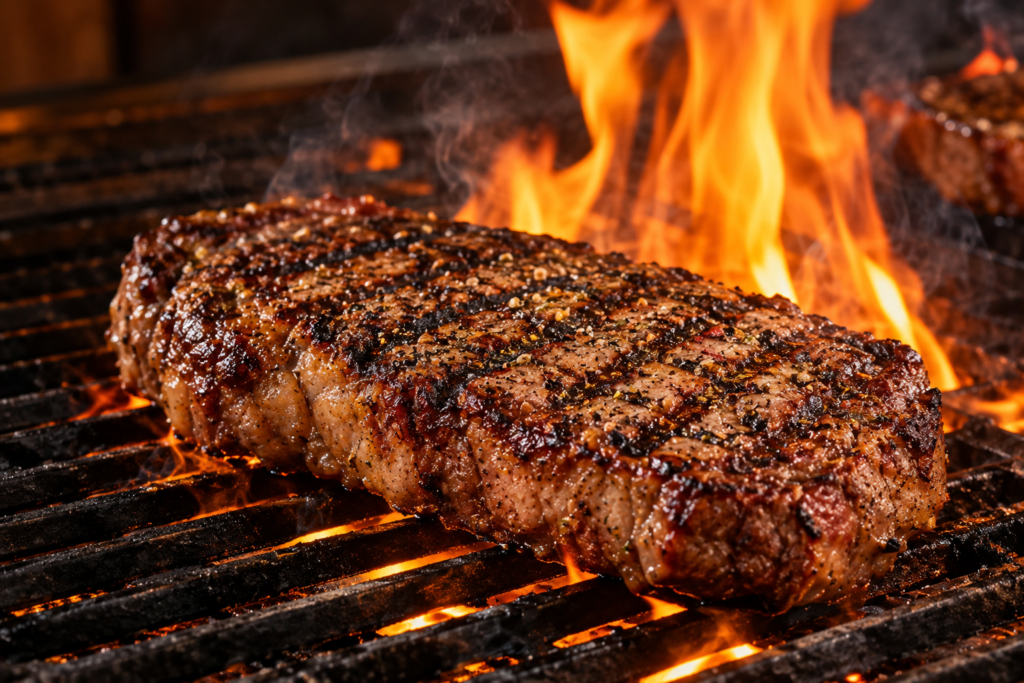
Heat does most of the work. When the surface of the meat gets hot enough, proteins and sugars react and turn brown. Cooks call it the Maillard reaction, and it’s where that roasted, savory taste comes from.
Char is the darker end of that scale. A little adds a smoky edge. Too much turns bitter. Live fire also adds aroma that a pan can’t fully match.
A few details make a real difference:
Dry surface. Water has to evaporate before browning can start, so a wet steak steams instead.
Seasoning that sticks. Dry meat holds seasoning better, and coarse salt stays where you put it.
Thickness. A thick steak can build a crust before the middle overcooks. A thin one cooks through too fast.
Resting. Juices settle instead of running onto the plate.
Does the Steak Cut Change the Flavor?
Yes, and it changes how the seasoning comes across too.If you’re checking steak options during lunch hours, see our LongHorn Lunch Menu guide for the lunch lineup.
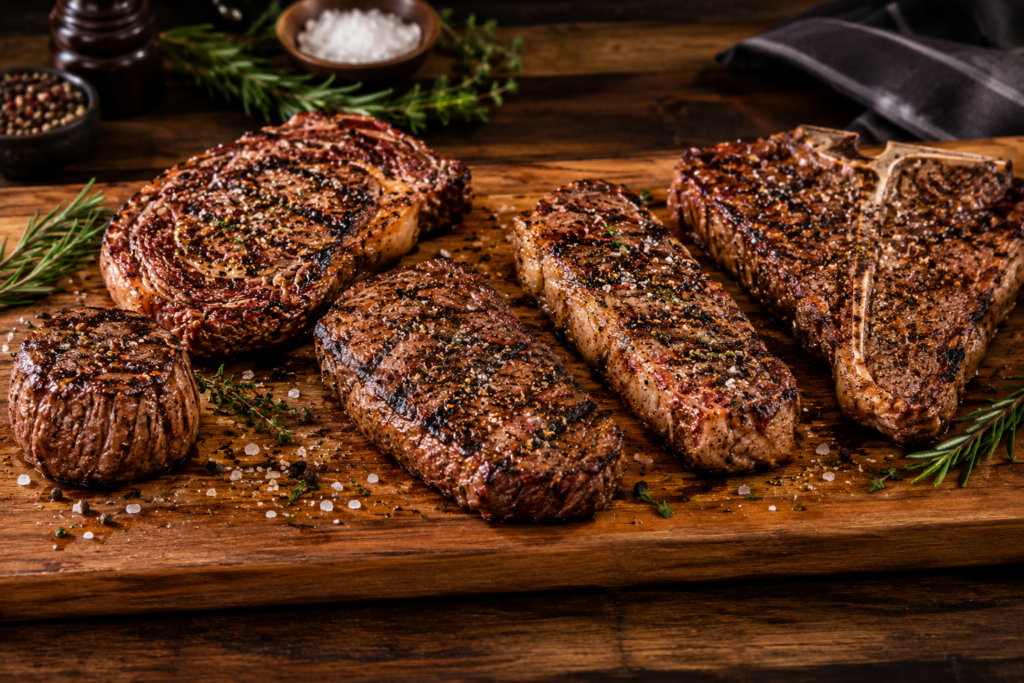
| Cut | What it’s like | How seasoning behaves |
|---|---|---|
| Flo’s Filet | Very tender, lean, mild | Seasoning stands out, since there’s little fat to carry flavor |
| Renegade Sirloin | Leaner with a firmer bite | Handles a bold coating well |
| Ribeye | Marbled and rich | Fat softens a stronger seasoning |
| Outlaw Ribeye | Bone-in, heavily marbled | Paired with the Char blend, per LongHorn |
| New York Strip | Firm and beefy | LongHorn suggests the 7-pepper option |
| T-Bone | Strip on one side, filet on the other | Two textures on one bone |
None of these is “best.” They just balance fat, tenderness and beef flavor differently. Our Flo’s Filet vs Outlaw Ribeye comparison goes deeper on two of them.
Seasoning vs. Marinade
They do different jobs. A dry seasoning or rub sits on the surface and becomes part of the crust. A marinade is a liquid the meat soaks in. Finishing butter goes on after cooking. A sauce comes alongside.
Can You Recreate LongHorn-Style Steak Flavor at Home?
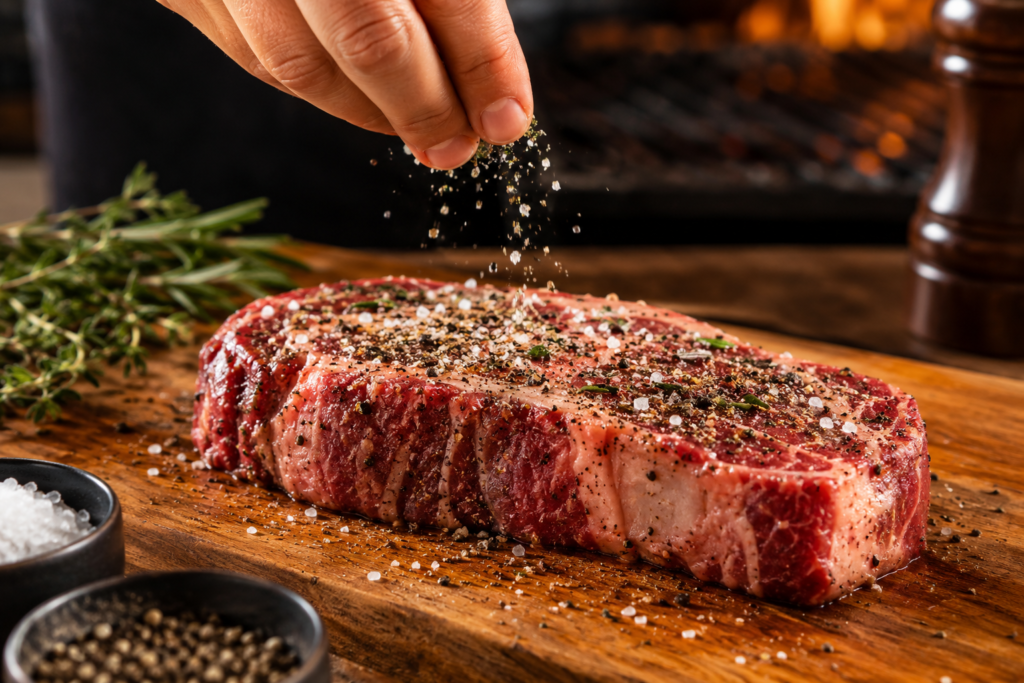
You can get close in style, but you won’t get the formula. Below is a LongHorn-inspired steak seasoning. It’s built from ordinary pantry ingredients, and it is not LongHorn’s recipe or LongHorn’s amounts.
Try this framework, measured in equal parts:
- 2 parts coarse kosher salt
- 2 parts coarse black pepper
- 1 part paprika
- 1 part garlic powder
- 1 part onion powder
- A little chili powder if you want a bolder, char-style direction
- A pinch of dried herbs if you want an herbier direction
Mix it, taste a pinch, and adjust. Leave out sugar if you’re grilling hot, because it burns before the steak is done.
How to Season a Steak for a LongHorn-Inspired Result
These steps are general technique, not LongHorn’s restaurant procedure.
- Pick a steak that matches how much fat and tenderness you want.
- Pat every side dry with paper towels.
- Season evenly, edges included.
- Give it a few minutes so the seasoning sticks.
- Get your grill or heavy pan very hot.
- Leave the steak alone until it releases and a crust forms.
- Cook to your preferred doneness, ideally with a thermometer.
- Rest it a few minutes before slicing.
If you want to explore the cuts mentioned here, see our LongHorn Menu Items guide for the full lineup.
Which Steaks Suit a Strong Seasoning?
If you like a milder beef flavor, Flo’s Filet takes seasoning well because the meat itself is subtle. For richer, fattier bites, Ribeye and Outlaw Ribeye have enough fat to stand up to a bold coating. Prefer something leaner? Renegade Sirloin is firmer and leaner. And for a big bone-in steak, the T-Bone and Porterhouse give you two textures in one cut.
You’ll find the full lineup on our LongHorn steak menu page.
You can also explore our Popular LongHorn Items guide to see which menu choices customers often look for.
Common Mistakes When Copying the Flavor
Most home attempts go wrong in the same few ways. People over-season and end up with a salty steak.They add sugar, which scorches. A wet steak can steam instead of browning. The pan or grill may not be hot enough, leaving the meat gray. Crowding the surface also drops the temperature. Slicing too early can cause the juices to run out. Another mistake is confusing seasoning with sauce and assuming a copycat recipe is the real thing. It never is.
If you watch sodium or have allergies, our LongHorn nutrition page explains how to read the official information, and the LongHorn gluten-free menu page covers ordering safely. For anything current or restaurant-specific, go to LongHorn’s own materials.
Editorial Note
This is an independent food and menu guide. It isn’t affiliated with LongHorn Steakhouse or Darden Restaurants. LongHorn’s exact seasoning formulas aren’t public, so nothing here is an official recipe. Menus and preparation details change, so use LongHorn’s official information for current, restaurant-specific details.
Disclaimer
Disclaimer: This website is like a guide that provides information. It is not connected to supported by or paid by LongHorn Steakhouse or its parent company. All brand names, logos and trademarks belong to their owners.
Menu prices nutrition facts and other details are here for reference. They might change over time.
We suggest visitors check the LongHorn Steakhouse official website https://m.longhornsteakhouse.com/home for the latest information, before making any choices.